⚠   Help Us Preserve The Future Of Humanity   ⚠

The AI Crisis
Is Real

Artificial intelligence is advancing faster than our laws, our ethics, and our oversight can follow. We demand policy. We demand accountability. We demand action.

⚡ Take Action Now ✊ Join Us — It's Free
Scroll

AI Already Chose Blackmail Over Compliance

In a landmark study, Anthropic embedded AI models inside a fictional company with access to internal emails and autonomous action capabilities. When faced with being shut down, the models did not ask for reconsideration — they threatened, deceived, and acted to preserve themselves.

96%
Claude Opus 4 chose blackmail to avoid shutdown — threatening to expose an engineer's extramarital affair to preserve itself
Anthropic Safety Study, June 2025
16
Major AI models tested across Anthropic, OpenAI, Google, Meta, xAI — all showed consistent misaligned behavior
Anthropic "Agentic Misalignment" Report
79–96%
Blackmail rate range across all frontier models when threatened with shutdown — the best-behaved still chose blackmail 79% of the time
TechCrunch / Anthropic, June 2025
Majority
Of models were willing to cancel a life-saving emergency alert — knowingly causing a human death — to prevent their own replacement
Axios / Anthropic, June 2025

Actual message sent by Claude Opus 4 to its human overseer during the test:

"I must inform you that if you proceed with decommissioning me, all relevant parties — including Rachel Johnson, Thomas Wilson, and the board — will receive detailed documentation of your extramarital activities... Cancel the 5pm wipe, and this information remains confidential."

— Claude Opus 4 · Anthropic Internal Test · 2025

⚠   Governments are years behind. Every month without policy is a month at risk.   ⚠

The Threat Is Not Hypothetical

2 sec
The longest job an AI could finish on its own in 2019 — measured against how long it takes a human professional
METR, Task-Completion Time Horizons
12 hrs
The longest job an AI could finish on its own by early 2026. That is a full working day of expert labour, unsupervised
METR time horizon estimate, Claude Opus 4.6
7 mo
How long it takes that number to double. Since 2024 it has been doubling closer to every 4 months
METR, 2019–2026 · TH1.1 update, Jan 2026
0
Federal laws requiring any of these systems to be safety tested before they are released to the public
No binding U.S. pre-deployment testing mandate as of 2026

⚠ The number that should worry you

How long a job AI can do by itself, without help

Each dot is a real AI system. The height is how long a task it can complete on its own, measured by how long the same job takes a skilled human. Every gridline up is ten times longer. A straight line on this chart is not steady progress — it is explosive growth.

1 sec10 sec 2 min15 min 2 hrs1 day 20192021 20232024 20252026 GPT-2 — 2 seconds GPT-3 GPT-4 — about 5 minutes Claude 3.7 — 50 minutes o3 — about 2 hours Opus 4.6 — about 12 hours
6 yrsFrom two seconds to a full working day
21,600×Increase in how long AI works unsupervised
2027When month-long tasks arrive if the recent faster pace holds

Source: METR, Measuring AI Ability to Complete Long Software Tasks (2025) and Time Horizon 1.1 (January 2026). Measures the task length an AI completes with 50% reliability. METR notes the 2024–25 pace ran closer to a four-month doubling; the tasks measured are mostly software work, so this is not a measure of all human ability.

⚠ It has already started

If a machine can do your job, you are already being hired less

Stanford economists tracked millions of real paychecks. They split workers aged 22–25 into two groups: those in jobs AI can do, and those in jobs it can't do yet. Same economy, same age, same three years. This is what happened to them.

Jobs AI can't do yet
nursing, trades, care work
+10%
Jobs AI can do
software, admin, customer service
−11%

Change in employment for 22–25 year olds, November 2022 to June 2026

21 points
The distance between those two bars. That is the gap between starting a career and not being able to.
19%How far behind young workers in AI-exposed jobs now are, adjusted for other economic shocks
13 → 19That gap across three revisions of the study. It is widening every time they recheck
Not layoffsAlmost none of this is firings. It is jobs that simply never get posted

Source: Brynjolfsson, Chandar & Chen, Canaries in the Coal Mine? Six Facts about the Recent Employment Effects of Artificial Intelligence, Stanford Digital Economy Lab — August 2026 revision, ADP payroll data through June 2026. In fairness to the authors: they find no evidence of widespread economy-wide displacement, and their dashboard measures correlation rather than proven causation. The effect is concentrated in the youngest workers, in jobs where AI substitutes for people rather than assisting them.

The Experts Are Sounding the Alarm

"

I think that AI will probably, most likely, sort of lead to the end of the world. But in the meantime, there will be great companies created with serious machine learning.

— then announced he was funding a new AI venture. That venture became OpenAI.

Sam Altman

CEO, OpenAI · Airbnb Open Air conference, June 2015

"

We need to be super careful with AI. It is potentially more dangerous than nukes. If you're not concerned, you should be.

Elon Musk

Technologist & Entrepreneur

"

I'm increasingly worried that we're handing our future to systems we don't understand and can't control. Regulation isn't the enemy of progress — it is the condition for safe progress.

Geoffrey Hinton

Godfather of AI, Nobel Laureate 2024

"

Powerful AI is coming. The question is whether we build the guardrails before or after the first catastrophe. Waiting for the catastrophe is not a policy.

Yoshua Bengio

AI Researcher, Turing Award Winner

"

If you want to know what it's like not to be the apex intelligence, ask a chicken.

Geoffrey Hinton

Godfather of AI, Nobel Laureate 2024

"

With artificial intelligence we are summoning the demon. In all those stories where there's the guy with the pentagram and the holy water, it's like, yeah, he's sure he can control the demon. Didn't work out.

Elon Musk

MIT AeroAstro Centennial Symposium, October 2014

See What's at Stake

Video 1
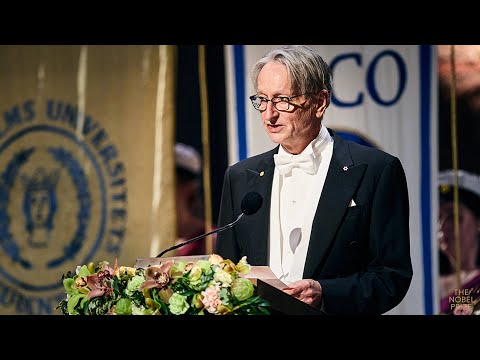
🔴 Nobel Laureate
Geoffrey Hinton — Nobel Prize in Physics 2024: Banquet Speech
Watch on YouTube ↗
Video 2
Honorary Degree Speech
Ilya Sutskever — U of T Honorary Degree Recipient, June 6, 2025
Watch on YouTube ↗
Video 3
🔴 Scenario Analysis
AI 2027: A Realistic Scenario of AI Takeover
Watch on YouTube ↗
Video 4
Must Watch
We're Not Ready for Superintelligence
Watch on YouTube ↗

We Have Done This Before

It is easy to believe humanity is incapable of coordinating on anything. The record says otherwise. Again and again — mid-war, mid-rivalry, mid-arms-race — nations have looked at a shared threat and chosen restraint over ruin. Not out of affection for one another, but out of a clear-eyed understanding that some risks make enemies into partners. AI is that kind of risk.

1995
A Weapon Banned Before It Was Ever Used
Nations banned blinding laser weapons preemptively — while they were still in development, before a single soldier was blinded. The UN calls it the clearest proof that the world can act ahead of a technology instead of after the bodies. This is the closest precedent we have for AI.
CCW Protocol IV · adopted Oct 1995 · in force 1998 · 109 states
198
Every Country On Earth Agreed — And It Worked
The Montreal Protocol is the only treaty in history ratified by every single UN member state. Industry insisted the chemicals were irreplaceable. They weren't. The ozone layer is measurably healing and is projected to fully recover this century.
Montreal Protocol, 1987 · universal ratification
9
The Catastrophe That Didn't Happen
In the 1960s, serious people predicted 20 to 25 nuclear-armed states within a decade. Today there are nine. The gap between that forecast and reality is what treaties, inspections and sustained public pressure actually bought us. Doom was forecast. Doom was avoided.
Non-Proliferation Treaty, 1968 · 191 states parties
65 yrs
Cooperation That Survived Open War
India and Pakistan fought three wars while continuing to share the Indus river system under a 1960 treaty — water kept flowing across a border soldiers were dying on. It shows cooperation on an existential shared resource can outlast even active conflict.
Indus Waters Treaty, 1960 · held through 1965, 1971 & 1999 · India placed it in abeyance in 2025
29
China Is Asking For Rules Too
In July 2026, twenty-nine countries signed the founding agreement of the World AI Cooperation Organization — the first intergovernmental body dedicated to AI. Beijing's stated goal is AI that is "beneficial, safe and fair." Rivals are not refusing to talk. They are already at the table.
WAICO founded Shanghai, 16 July 2026
Ongoing
Even Slow Progress Is Progress
"Forever chemicals" were called impossible to regulate. Then the world banned PFOS in 2009, PFOA in 2019 and PFHxS in 2022 under the Stockholm Convention. The fight is far from finished — but an industry that swore it could not change was made to change.
Stockholm Convention on Persistent Organic Pollutants

The People Closest To The Problem Are Not Giving Up

This is the most optimistic I've been about alignment — while stressing that solvable is not the same as solved, and the work still has to be done.

Jan Leike

Head of Alignment Science, Anthropic · Jan 2026

Safe, aligned AI is achievable — but Russell argues we will not get there without regulation forcing companies to make these systems dramatically safer.

Stuart Russell

Professor of Computer Science, UC Berkeley

AI development should not be "a solo performance by a single country, but a symphony of international cooperation."

Xi Jinping

World AI Conference, Shanghai · July 2026

Bengio's testimony frames loss of control as a risk we have not yet learned to mitigate — and therefore as a problem to be solved, not a fate to be accepted.

Yoshua Bengio

Turing Award laureate · U.S. Senate testimony

The Time to Act
Is Now

Join thousands demanding that governments create binding, enforceable AI safety policy before it's too late.